Do You Need a Content Calendar for Your Blog? (Honestly, It Depends)
There’s a version of blog advice out there that says you need a consistent posting schedule and a calendar with a month’s worth of ideas planned before you even start writing.
This advice stresses me out a little, and honestly, I just don’t think it’s helpful for business owners getting started with blogging.
Having a set schedule and content plan doesn’t matter as much as actually publishing blog posts. But, the truth is – when you’re trying to blog strategically in a way that grows your business, having a content calendar DOES help.
So do you need one? Not necessarily. But it’s worth understanding how having one can benefit you and make your blogging efforts more effective.
How a Content Calendar Helps You Plan More Effectively
A content calendar forces you to think about your blog strategically BEFORE sitting down to write. Specifically, it helps you:
- Plan content that supports your offers. If you want to drive traffic to a specific product or service your offer, you can work backwards – what problems do your ideal customers have, and what topics position your offer as the solution? What are they Googling right before they’d be ready to buy?
- Stay ahead of seasonal or timely content. SEO takes time. If you want a post to get traffic in time for a specific season, launch, or promotion, it needs to be published with enough lead time (could be weeks or months) to actually rank on search engines.
- Build topical authority. One strategy for ranking on search engines is building content clusters – multiple posts that work together to cover one topic comprehensively. A content calendar makes it easy to plan these clusters, which can improve your SEO and help you rank easier.
- Batch write your blog content and stay more consistent. Having the next month or two of blog content mapped out makes it easier for you to take advantage of little blocks of writing time or draft multiple posts at once. Batching doesn’t work for everyone, but if it does work for you, having a plan before you sit down to write is the best way to make it happen.
How a Content Calendar Helps You Keep Track of What You’ve Already Created
Once you’ve been blogging for a while and have a few dozen posts on your site, it can be genuinely hard to remember what you’ve already covered. Without some kind of system, you might end up accidentally duplicating topics.
A blog content calendar also works retroactively to help you keep track of the posts you’ve already published.
Having your entire blog library organized in one place makes it easy to see gaps in your content, stay on top of blog post updates, and figure out which posts could be repurposed into something else.
When a Content Calendar Isn’t Necessary
If you’re getting started with blogging and the goal is just to start writing, don’t let “planning” become another form of procrastination.
If planning months of content in advance and batching it out doesn’t work for you, then don’t do it. If writing a blog post whenever you stumble across a great keyword, a client asks a question you want to answer in longform, or something shifts in your industry works for YOU, then that’s perfectly acceptable.
HOWEVER, regardless of whether or not you use a content calendar for planning, I do still recommend having a retroactive “content calendar” of sorts – a list or database of your published blog posts so you can easily keep track of them.
What’s Most Useful to Track in a Blog Content Calendar
As a blog writer for business owners, one of the very first things I do for monthly clients is build out a content calendar for them.
These are the things I find most useful to track in a content calendar:
- Blog post title
- Blog category
- Target keyword
- Published date
- Last updated date
- Call-to-action (CTA)
- Status (drafting, scheduled, published, updating, etc.)
A content calendar should help you feel organized so blogging is more manageable. If it doesn’t, it’s a sign you’re overcomplicating it or adding too many bells and whistles.
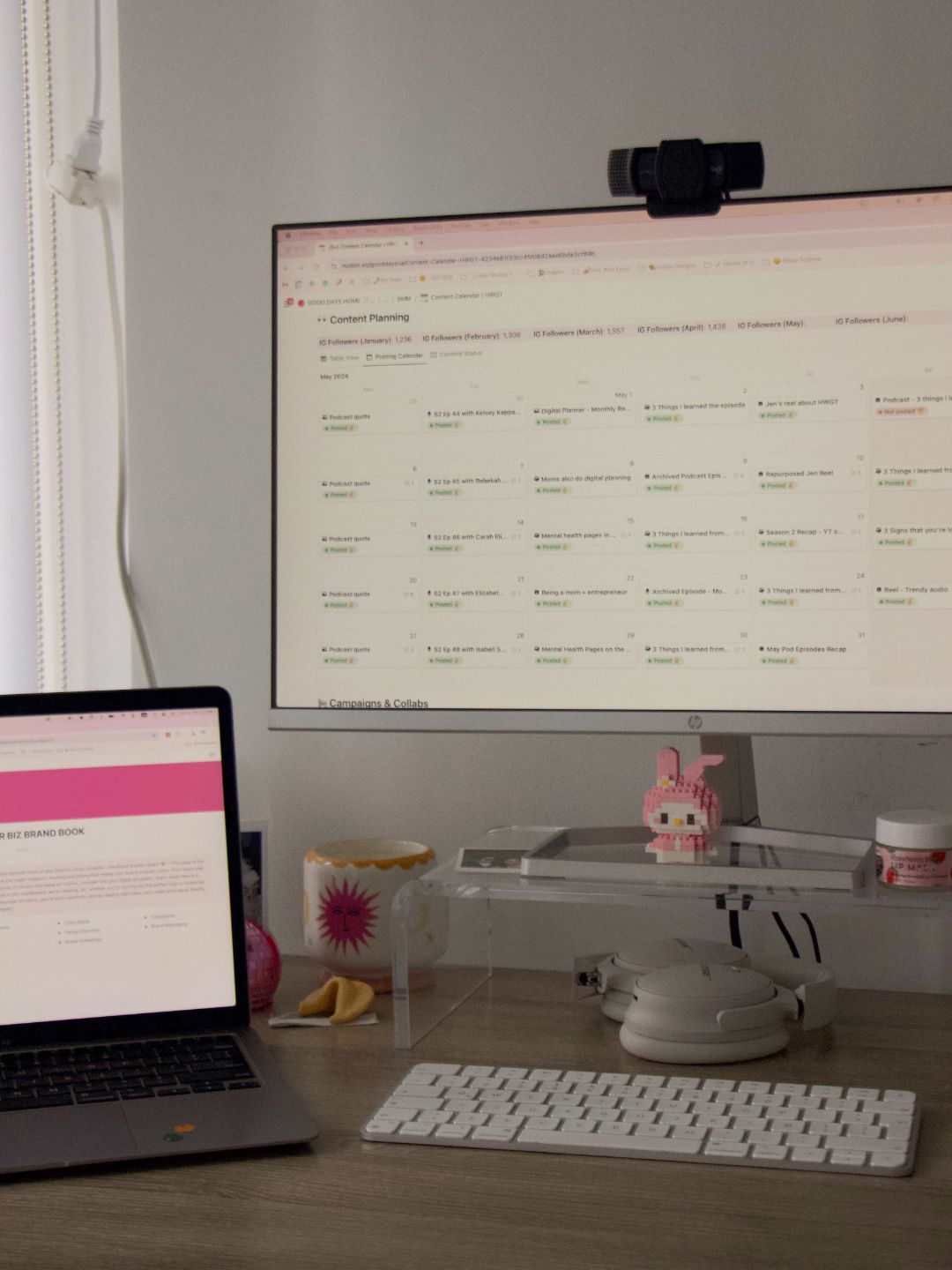
Tool recommendations: I use Notion because it’s great for building simple custom databases. But there are plenty of other tools out there – Clickup, Monday, Trello, Asana, or even Google Sheets are all good choices.
You don’t need a perfectly thought-out system before you start blogging. Having a content calendar is useful because it lets you think about your blog content more strategically and plan accordingly. But if you’re stuck in the planning phase, it’s totally okay to stop overthinking it and just start writing.
Over time, you’ll intuitively know the best topics to cover on your blog. A content calendar is just a tool that helps you be more intentional from day one.
Use one. Or don’t use one. The choice is yours!
Orrr, if you feel like you’re publishing blog content without much direction and it doesn’t feel like it’s building anywhere, check out my done-for-you blogging services.
You May Also Like