How to Do Blog Keyword Research for Free
One hill I will absolutely die on as a blog strategist and mentor? Not EVERY blog post you write needs to be focused around an SEO keyword.
…but that doesn’t erase the fact that SEO *is* still a key part of getting your business website found by ideal clients.
The truth is, you need to know how to do blog keyword research as a business owner. It’ll help you understand what things prospective clients are searching for and the topics they’re typing into Google.
There are about a bajillion different paid SEO tools you can invest in to conduct keyword research, but this blog post is about how you can find keywords to target for free.
This post contains affiliate links, which means I earn a small commission if you click and make a purchase. It’s at no extra cost to you, and I *promise* I only ever link to products I actually use and love myself.
What is Keyword Research, Anyway?
Simply put, keyword research is the process of finding SEO keywords to target in blog posts.
An SEO keyword is simply a phrase people type into Google (and other search engines) when they’re looking for something or trying to find an answer to a question.
Keyword research is how you figure out which phrases your ideal clients are searching for and figure out how competitive they are to rank – meaning, how hard it’ll be to show up on page one in the search results.
3 Easy & Free Methods for Finding Blog Keywords
Before trying to do any sort of keyword research, I always recommend making sure you have an understanding of your target client. Start by brainstorming a list of phrases, questions, and/or problems they have and the things they might be Googling about it.
Only then is it time to move on to one of these keyword research methods:
Google Autocomplete
Google’s Autocomplete feature is when you start typing into the search bar and it populates suggestions to finish your query. Autocomplete suggestions are based on actual user search behavior, so they’re a goldmine for doing free keyword research.
Here are a couple ways you can use it:
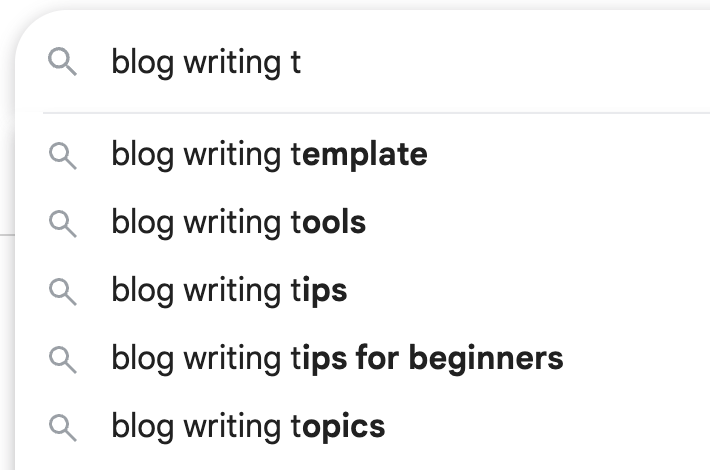
Type in your niche or a common industry phrase, then go through the letters of alphabet and see what autocomplete suggestions come up. This is often called the “ABC method” or the “alphabet soup method.”
Ex.) blog writing a, blog writing b, blog writing c, etc.
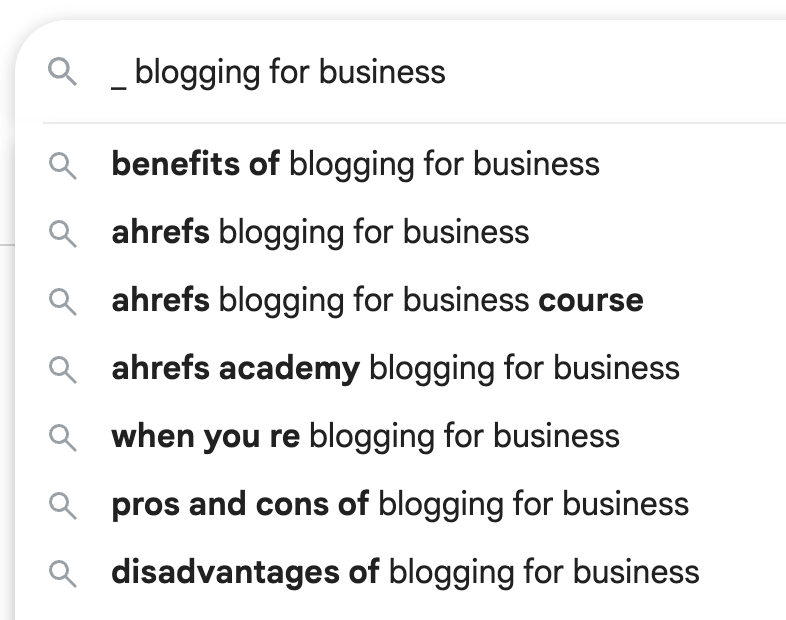
Place an underscore at the beginning or end of a niche phrase/common industry term to get long-tail keyword suggestions.
Ex.) _ blogging for business
“People Also Ask”
Google’s “People Also Ask” is a great way to find long-tail keyword gems.
Start by searching a common question or query relevant to your industry, then scroll down the page and look for the “People also ask” and “People also search for” sections.
These sections don’t appear for every keyword, but when they do, they’re a great opportunity to incorporate into your blogs, whether that be in a FAQ section at the bottom of a post OR writing a new, dedicated post.
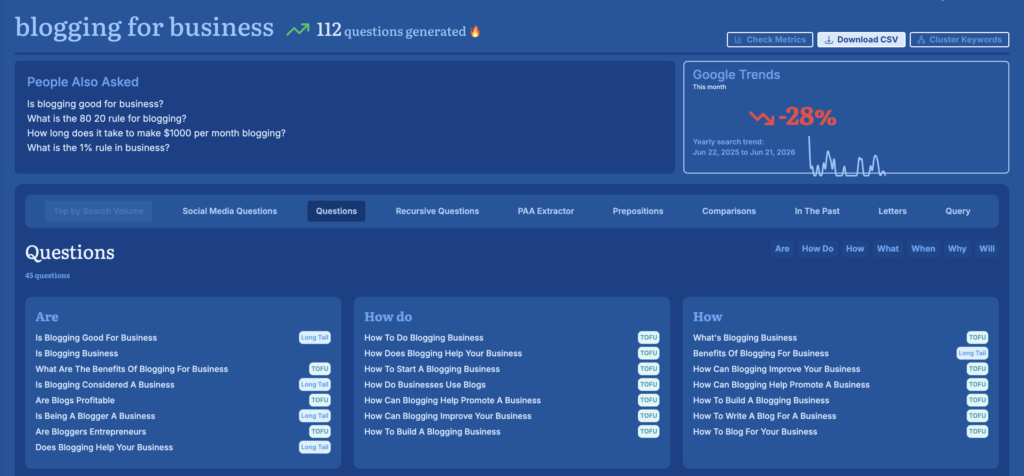
TIP: Answer Socrates lets you pull questions from Google’s “People also ask,” organizes them in a way that’s easier to look at, and gives you some data about the keyword from Google Trends.
The catch is you only get 1 search per day, but it’s super helpful when using this keyword research method!
Ubersuggest
Ubersuggest is a paid keyword research tool, BUT you can use it for free for 1 keyword search per day.
I recommend using the previous methods to find potential keywords, then run them through Ubersuggest to check these two things:
- Search volume: This is how many searches a keyword gets each month. Aim for keywords with search volumes higher than zero, but keep in mind that Ubersuggest isn’t 100% accurate and sometimes the real number is actually higher or lower.
- Difficulty score: This tells you how competitive a keyword is to rank on page one of the search results. If your website is new, targeting keywords with low difficulty scores is best. However, because there are sooo many factors to ranking, picking an “easy” keyword isn’t a guarantee you’ll rank.
Keep in mind, though, that the numbers keyword research tools (like Ubersuggest) aren’t 100% accurate. In my experience they’re usually at least a littleee bit off, and sometimes they’re either totally incorrect or for whatever reason don’t actually have data to show you.
And once you’ve mastered all that…
…it might be time to invest in a paid keyword research tool.
Paid tools just make keyword research easier, especially once you’ve been blogging for a while. They make it easier to find and analyze keywords in bulk and easily keep track of the ones you want to target. Most of them also come with other useful features for blogging.
The keyword research tool I personally use and recommend is KeySearch. It’s easy to use AND super affordable. Sign up for a free trial of KeySearch here.
You May Also Like