
5 Types of Blog Posts to Write as a Business Owner
Can we please stop thinking strictly in terms of SEO when it comes to the types of blog posts we’re writing?
Don’t get me wrong: SEO is important, and doing your due diligence (AKA keyword research) to make sure you’re writing blog posts that people are actually searching for is ideal.
But there are other purposes beyond just “get organic traffic” that blog posts can serve in your overall content ecosystem.
Let’s talk about five purposeful, strategic blog types all business owners can leverage.
1. Search Magnets
I’ll just start with this one, because we all know SEO is important. Search Magnets are the blog posts that cover topics people are actively searching for, that get you found on Google by people who need what you offer.
These are often long-tail queries or questions with low SEO difficulty (meaning, they’re relatively easy to rank on page 1 of Google for).
>> RESOURCE: How to Do Blog Keyword Research for Free
These kinds of blogs are great at getting people onto your website, but these aren’t necessarily people that will stay in your world if they just wanted a simple question answered. Still, building a foundation of posts like these can help you start ranking for more competitive keywords in your niche.
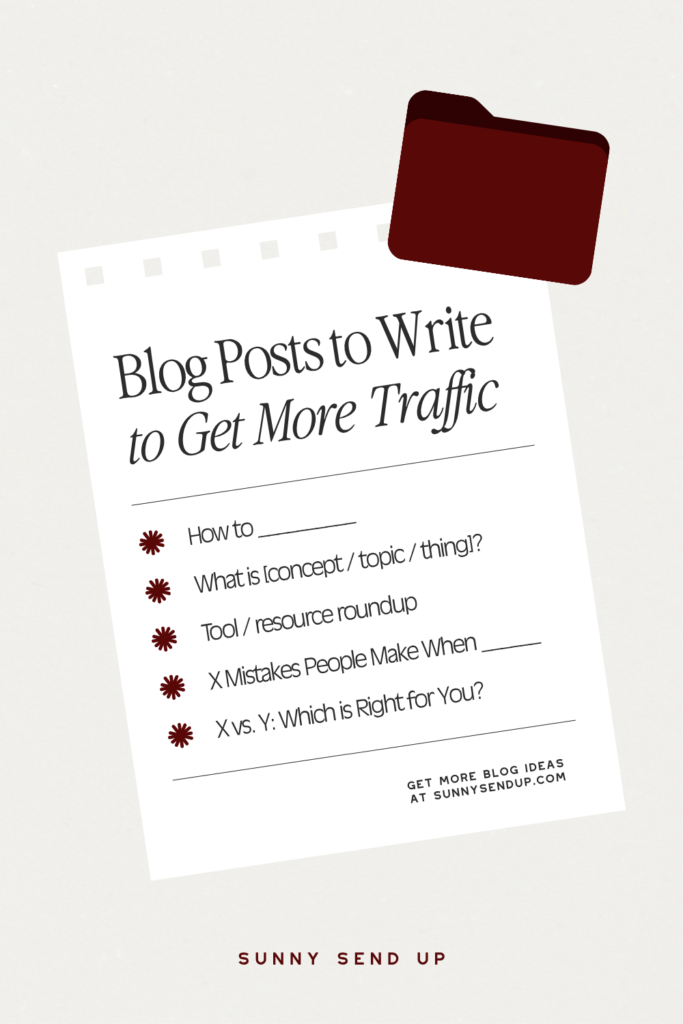
Examples of Search Magnet blogs:
- “How to [concept your audience asks about]”
- “What is [concept/topic/thing]”
- Roundups of tools and resources relevant to your industry
- “X Mistakes people make when [doing the thing you help with]”
- Comparisons: “X vs. Y: Which is right for you?”
2. Deep Dives
Deep Dive blogs are in-depth posts that make someone think, “this person really knows their shit.”
These posts are often born when you’re targeting an SEO keyword and find you have so much more to say on the topic. They blend your expertise, industry insights, and lived experiences to go beyond surface-level advice anyone could have written.
Deep Dives are great for addressing common questions or objections people have about what you do. And the beautiful thing is once you’ve written them, you’ll have a resource you can easily send to someone the next time you’re asked the same question for the zillionth time.
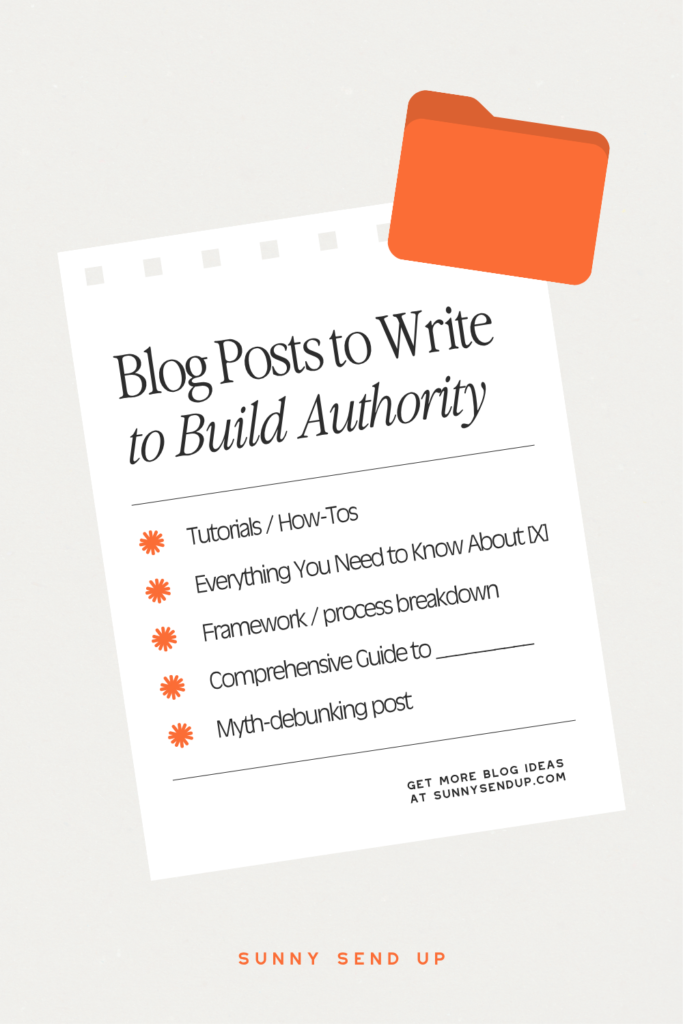
Examples of Deep Dive blogs:
- Tutorials or how-tos
- “Everything you need to know about [something in your industry]”
- Breakdown of a process, system, or framework you use (like this post you’re reading!)
- “Comprehensive guide to [concept clients always ask you about]”
- Debunk the biggest or most common myths in your industry
3. Taste Tests
What I call “Taste Tests” are blog posts that give people a teaser of what it’s like to actually work with you.
You’re probably thinking, “So, a case study?” And sure, it totally can be!
But if you don’t have case studies to showcase yet, you can still create Taste Test content – you just have to get a little creative with it. The point is basically to show how you work and how you think in action, so someone can decide whether they vibe with you or not.
People love knowing what to expect, so giving them sneak peeks into your process is a great way to help them feel more confident moving forward.
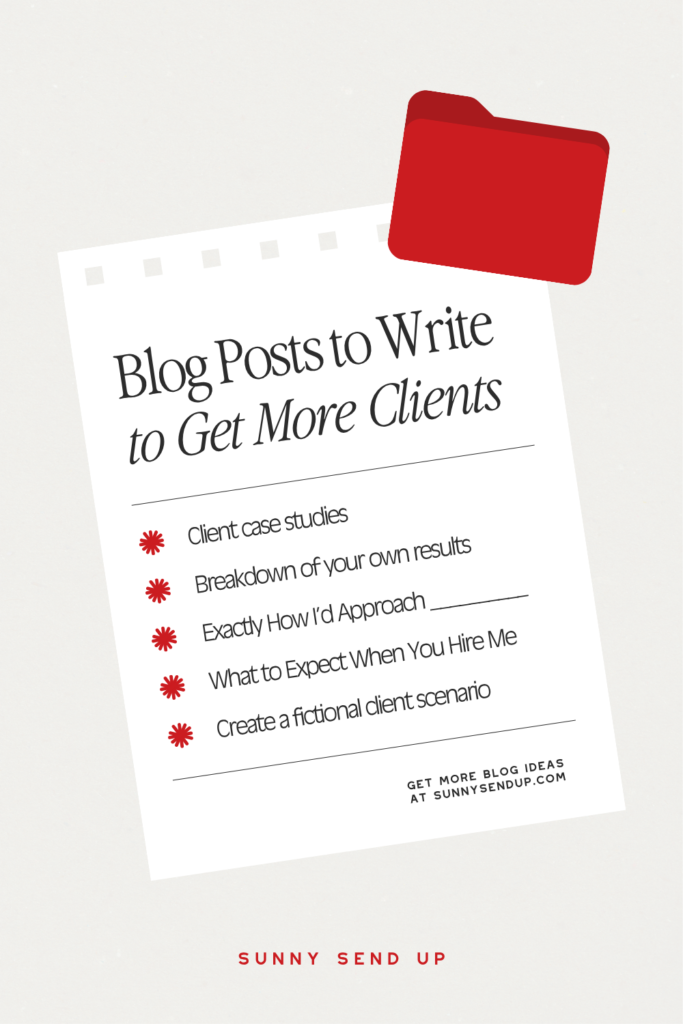
Examples of Taste Test blogs:
- Client case studies
- Self case study
- “Exactly how I’d approach [common scenario your clients face]”
- “What to expect when you hire me for [service] / when you join [program]”
- Put your expertise to work on a fictional client scenario
4. Soft Sells
Soft Sells are blog posts that highlight and promote your offers. We often think of blogging as our top-of-funnel (and email as our “sales” platform), but blogs are truly more versatile than we give them credit for!
Blogs can support your offers by creating awareness for the problems people have before they work with you and the solution you provide. The key is that the content of the blog should actually feel valuable to the reader and position your offer like an optional next step.
The goal of these blogs is more conversions, but remember blog readers are often a cold audience – so it shouldn’t read like a full-on sales pitch.
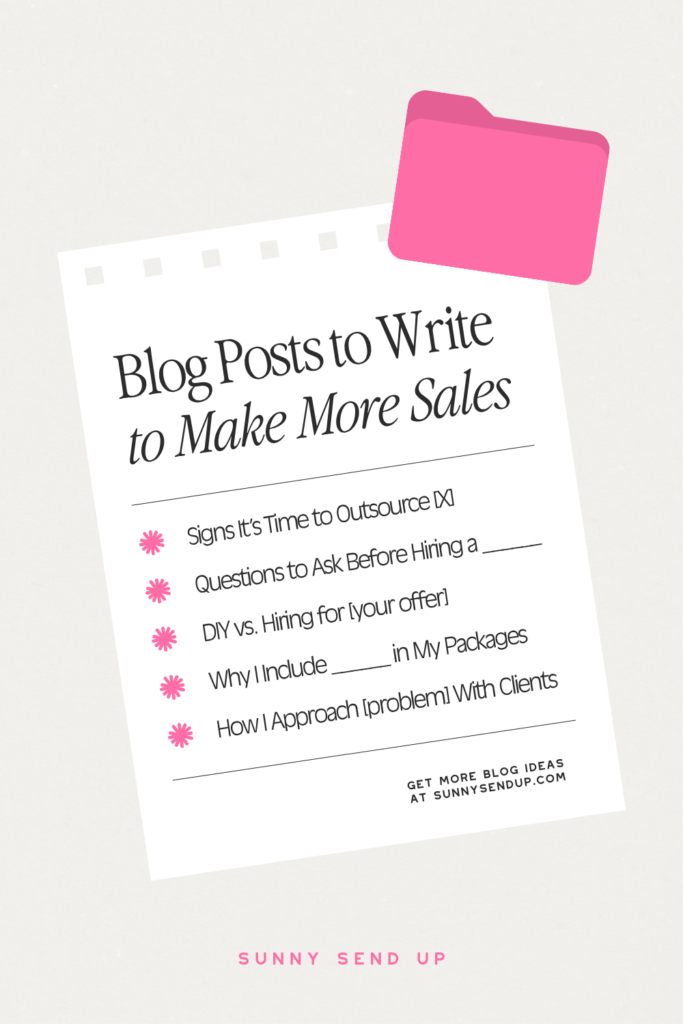
Examples of Soft Sell blogs:
- “Signs it’s time to outsource [your service]”
- “Questions to ask before hiring a [your title]”
- “DIY vs. hiring for [your service]”
- “Why I include [something special you do] in my packages”
- “How I approach [common problem] with my clients”
5. POV Pieces
POV Pieces are my absolute favorite type of blog post, because they’re what make your blog feel like YOURS instead of blending in with all the other industry blogs in your niche.
These are where your personality, opinions, and perspectives really take center stage. I see so many business owners ignoring these blogs because they’re not a direct path to more traffic or sales. But they DO make your blog binge-able.
Sure, you can drive visitors to your blog with the right SEO keywords, but if your blog isn’t interesting and enjoyable to read, they’re not going to stay and keep poking around.
This isn’t 2010 – nobody cares about what you had for dinner last night or your outfits of the week, but showcasing your personality and beliefs a little goes a long way in connecting with readers.
Examples of POV Piece blogs:
- Something you’ll never do/offer your clients & why
- The things you’ll die on a hill about
- “Why I think [widely accepted belief your audience holds] is holding you back”
- Standard advice in your industry you disagree with
- Your unpopular opinion about something in your industry

Why the 5 Blog Types Matter for Your Business
Yes, you want your blog posts to actually rank and help your SEO.
But some of the most helpful and memorable blog posts I’ve read weren’t written solely for SEO or to rank. I only came across them because I was already binge-reading that person’s blog!
If you’re JUST writing blog topics you think Google will like, you’re missing out on opportunities to build authority, connection, and trust with the audience you already have.
You’re also probably losing out on potential subscribers and buyers who immediately click off your website after getting whatever quick fix they came for.
Your blog isn’t just there to attract cold Google traffic. It also needs to warm those people up. Its job is to educate, inform, inspire, and ultimately sell people on who you are and what you do.
This framework helps you diversify the types of blog posts you’re writing while staying strategic and making sure every piece of content serves a purpose. Because there’s a fine line between getting creative with your blog post topics and just publishing willy nilly.
Want Help Mapping Out Some Blog Ideas?
Understanding the different types of blog posts and actually using them in your business are two separate things, so if you’re feeling a little overwhelmed, I gotchuuu.
Starting June 8, I’m hosting a done-with-you blogging challenge where I’ll teach you how to brainstorm ideas for each of the blog types covered in this post. You’ll also learn how to repurpose your existing content into blog concepts, AND we’ll be writing one blog post together.
It’s 3 weeks, it’s literally a steal at $47, and it’s gonna be a super chill vibe. Join Soft Launch Summer here.
You May Also Like